The FarmLady Aquatics Founder Reveals the Simple 10-Minute Pond System That Helped a Struggling Catfish Farmer Go From Losing a Fortune in a Single Morning — to Finishing His Next Cycle With 91% Stock Survival
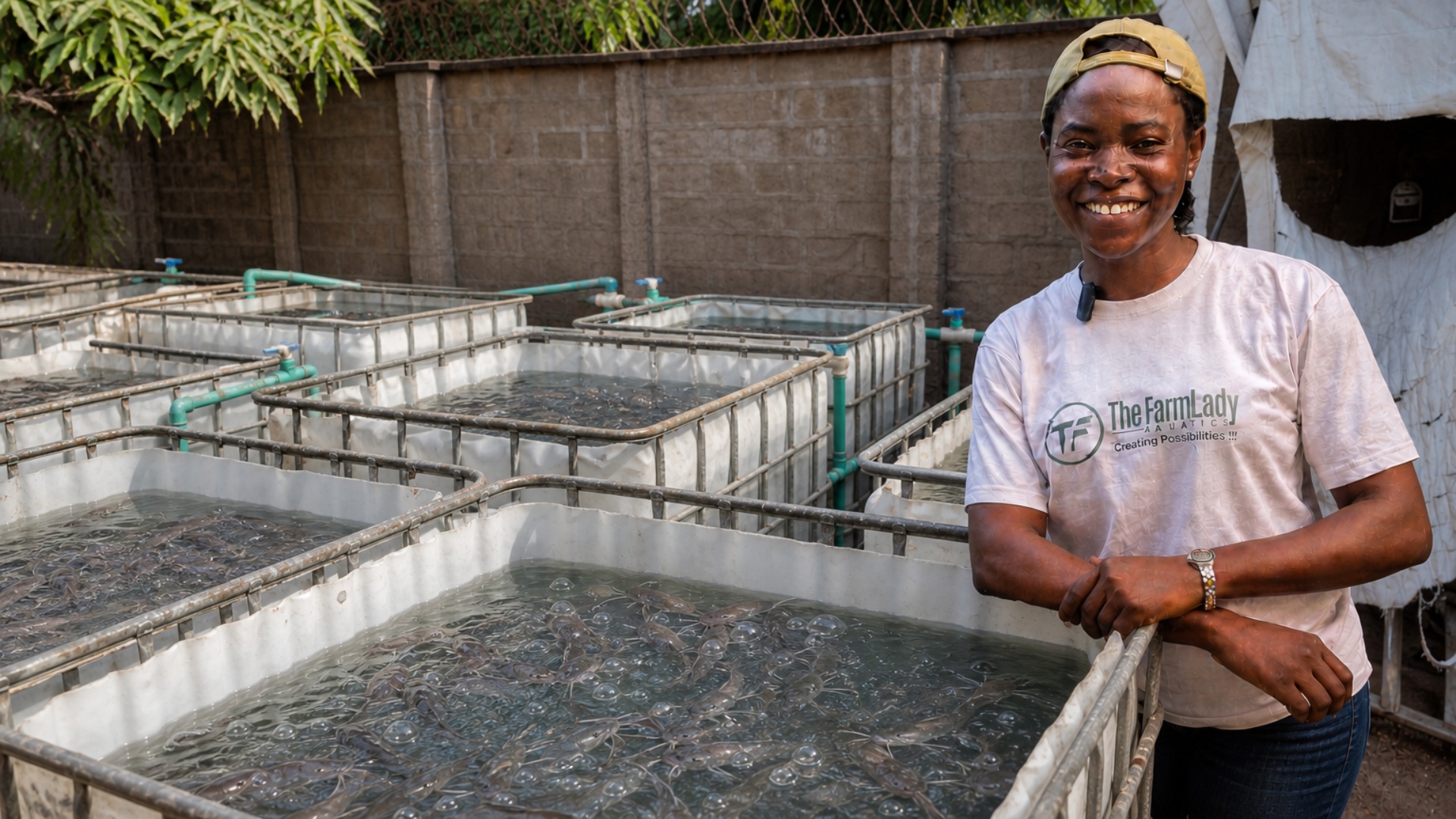
If you are reading this, I already know something about you.
You have lost fish you should not have lost.
Maybe it was a slow bleed — 10% here, 15% there, every cycle, like clockwork — and you have been telling yourself it is normal, it is part of farming, everyone loses some fish.
Or maybe it happened suddenly. One morning. You walked to your pond and they were floating.
And you had no idea why.
You asked around. You tried the salt. You did the water change. You spent money at the aquaculture supply shop on treatments whose names you can barely pronounce. You posted in the farming group and got fifteen contradictory answers in twenty minutes.
And through all of it — the money spent, the stock lost, the sleep missed — nobody sat down and showed you exactly what to look for, what it means, and precisely what to do about it.
That is not your fault. It is a gap in the way catfish farming is taught — and it is costing farmers across Africa and the diaspora enormous amounts of money every single cycle.
I have been training and consulting for catfish farmers for years. I have visited farms, reviewed setups, and worked with Fishprenuers across Nigeria, Ghana, Kenya, the UK, the US, and Canada. And the number one reason I see farmers lose stock — the reason that appears again and again regardless of region, pond type, or experience level — is not bad fingerlings, not bad feed, not bad luck.
It is that they do not know how to read their pond. They are farming blind.
Die-offs do not happen suddenly. They announce themselves — 24 to 72 hours in advance — in signs that are completely visible to anyone who knows what they are looking at.
Today I want to tell you about one farmer who learned this the hard way. Three times. And then what happened when he finally got the right system.
Drop everything you are doing and read every word of what I am about to share with you.
Before I tell you Emeka's story, let me tell you why I am the right person to tell it.
My name is Olabisi Oluwasikemi — most people in the catfish farming world know me simply as The FarmLady. I am the founder of The FarmLady Aquatics Limited, a catfish farming training and consultancy that has worked with over 1,000 Fishprenuers across Africa and the global diaspora.
I have been inside struggling farms. I have stood at ponds with farmers who are watching their investment disappear and do not know why. I have seen the same patterns repeat themselves across dozens of farms — the same warning signs missed, the same wrong treatments applied, the same money wasted on solutions that do not match the actual problem.
I did not build my reputation by telling farmers what they want to hear. I built it by telling them what actually works — based on what I have observed, tested, and documented across hundreds of real farm situations.
Emeka was one of those farmers. And his story is one I have seen too many times — and one I want you to learn from without having to live it yourself.

Emeka first contacted me after watching one of my videos on post-stocking management.
He sent a message asking if I offered one-on-one consultations. He needed help urgently. He was planning his fourth cycle and could not afford to lose again.
When we spoke, I asked him to walk me through his last three cycles. What he described was painful to hear — not because it was unusual, but because it was so familiar.
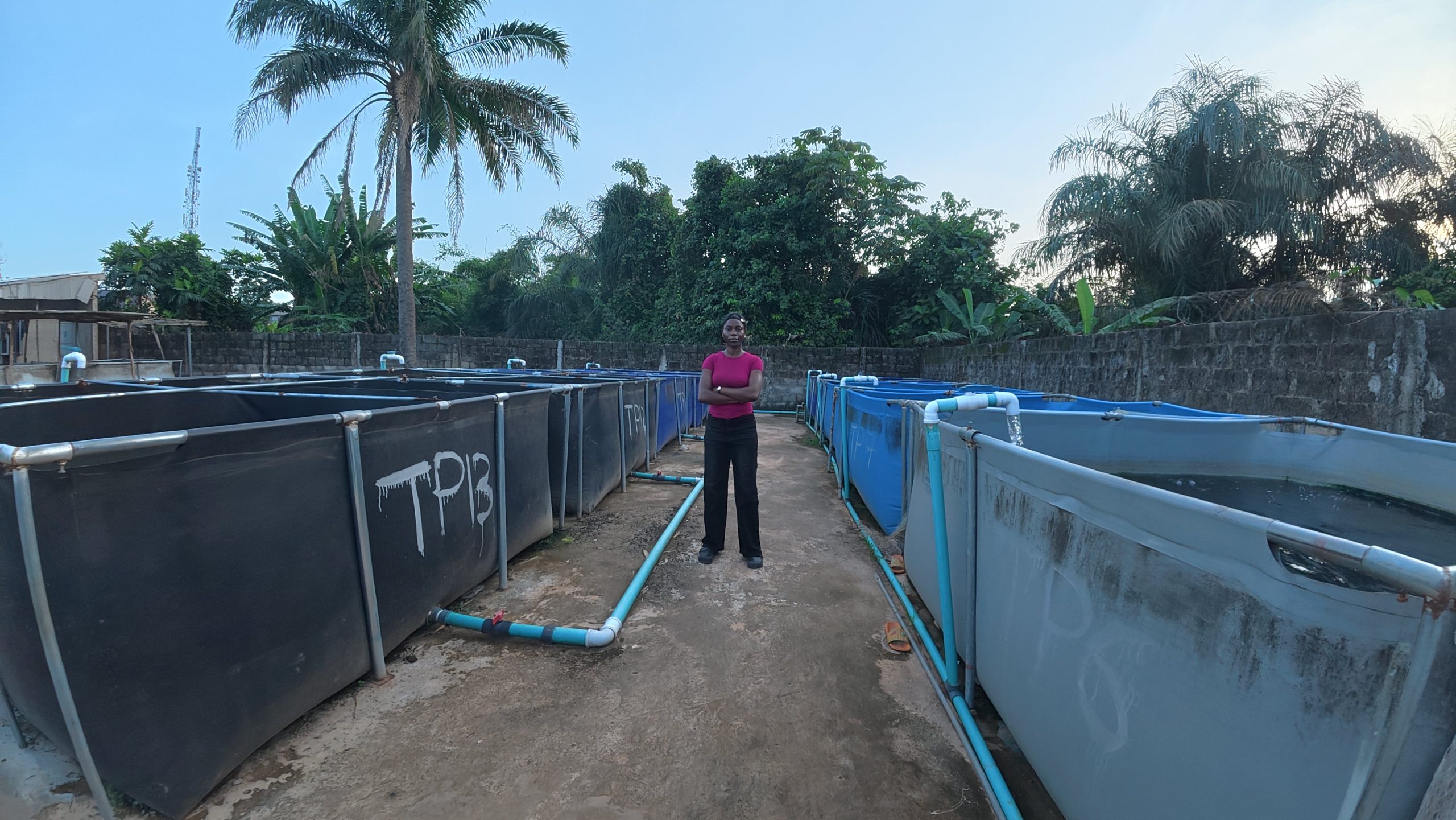
Emeka ran four concrete ponds. He had been farming since 2020. By the time he reached me, he had lost significant stock in every single cycle — sometimes gradually, sometimes catastrophically. His worst loss was his third cycle. He woke up one morning to find over 600 fish floating in a single pond. Three months of feeding. Gone overnight.
He was not an irresponsible farmer. He was not lazy. He was not cutting corners. Emeka was doing what the vast majority of catfish farmers do — working hard, spending money, asking for advice — without ever having been given a structured system for reading and managing his pond health.
I asked him to tell me what he had tried.
He listed them without hesitation. He had clearly been through this list in his head many times.
Salt treatment — every two weeks, as a preventive measure. The farming group standard. The problem is that salt addresses external parasites. It does nothing for bacterial infections, ammonia toxicity, or oxygen depletion. He was applying a solution to a problem he had not diagnosed.
Emergency water changes — large volume, done in panic when he noticed fish behaving strangely. In one instance this accelerated his losses because he changed too much water too quickly, causing osmotic shock in fish that were already immunocompromised.
Antibiotics from the aquaculture supply shop — bought without a diagnosis. If the cause of the outbreak is not bacterial, antibiotics do nothing. And even when the cause is bacterial, the wrong antibiotic applied at the wrong dosage is ineffective at best and harmful at worst.
A paid online catfish farming course — significant money spent. The course covered pond setup, stocking, and feeding schedules. It did not cover pond health monitoring, early warning signs, or emergency response. Excellent for starting a farm. Useless for saving one mid-crisis.
Changing fingerling suppliers — three different suppliers across three cycles. Emeka had convinced himself the problem was the genetics of the fish he was buying. It was not. The fingerlings were fine. The management system after stocking was the gap.
This is the part of the conversation I have with struggling farmers that changes everything.
I told Emeka: "Your fish did not die suddenly. I promise you they did not. There were signs in that pond 24 to 72 hours before the first fish floated. The signs were there. You just did not know what you were looking at."
There was a long pause on the call.
Then he said: "What signs?"
And that is the question that unlocks everything.
I walked Emeka through what I call the 7 Warning Signs — the observable behaviours, water conditions, and feeding patterns that consistently appear before a catfish mortality event. These are not theoretical. They are drawn from my own experience visiting and consulting on dozens of farms, combined with documented aquaculture science on Clarias gariepinus stress physiology.
Surface clustering near the water inlet. Abnormal swimming patterns — spiralling, listing, or erratic bursts. Appetite reduction before a visible health event. Water colour shift from clear to murky green or brown. A sharp or sour smell from the pond surface. Fish gathering unusually close to the pond walls. Loss of response to feeding stimulus.
Each one of these signs — alone or in combination — points to a specific root cause. Each root cause has a specific, proven intervention. And every single one of these signs appears before the fish start dying — giving the farmer a window to act.
Emeka was quiet for a moment after I finished. Then he said: "I saw some of those things on my third cycle. Before the die-off. I noticed the fish were behaving differently but I didn't know what it meant. I thought maybe they were just hungry."
I hear that sentence — or a version of it — from almost every farmer I consult with after a significant loss. I noticed something was different. I just didn't know what it meant.
That gap — between noticing and knowing — is where the money is lost.
I gave Emeka a structured system before his fourth cycle began.
A daily 10-minute morning observation ritual. A water colour and smell diagnosis chart. A traffic light scoring system for each pond — Green, Yellow, Red. And for each possible warning sign, a numbered emergency response protocol with exact steps, exact dosages, and exact timeframes.
He was sceptical at first. "This seems too simple," he told me. "Ten minutes a day and I solve the problem I have been fighting for three years?"
I told him: the simplicity is the point. Die-offs are not complicated events. They are preventable events that become catastrophic when the farmer has no early detection system. Ten structured minutes every morning is the early detection system.
On Day 11 of his fourth cycle, he messaged me at 6:45am.
He had seen the sign. He had identified it correctly. He had the language for it now because he had the system.
I confirmed his diagnosis and walked him through the intervention — partial water change at the correct volume, feeding reduction for 48 hours, increased aeration. Specific. Numbered. No guessing.
By Day 13, Pond 3 was scoring Green again.
Emeka did not lose a single fish in that intervention.
At the end of his fourth cycle, he harvested with 91% stock survival. His best result ever. By a significant margin.
Emeka is not the only one.
After seeing what this system did for him, I began documenting it properly and sharing it with other farmers I work with. The results have been consistent across different countries and farm types.
A farmer in Onitsha — Chidi — caught a developing fungal outbreak in his juvenile pond on Day 8 of a new cycle using the morning observation ritual. He finished that cycle with 88% survival. Before the system his average was 61%.
A farmer in Accra — Kwame — used the water colour diagnosis chart to identify an oxygen depletion issue building overnight. He caught it before a single fish died. "I had never been taught to look at the water this way," he told me. "I thought water was just water."
And a farmer managing a backyard operation in South London told me: "Seven years of farming and I had never been taught to read my pond. This system gave me what no course ever did."
After seeing this system work consistently across different farmers, different pond types, and different countries — I decided to do what I always do when something works.
I packaged it properly. Every warning sign, every diagnosis method, every intervention protocol, every checklist and tool — into one complete, practical guide that any catfish farmer can open on their phone, read in one sitting, and apply starting tomorrow morning.
You do not need to book a consultation with me. You do not need to be in a particular country. You do not need a water testing laboratory or an aquaculture degree. You need the guide, a pond, and ten minutes every morning.
Introducing the guide I wish every catfish farmer had before their first cycle...
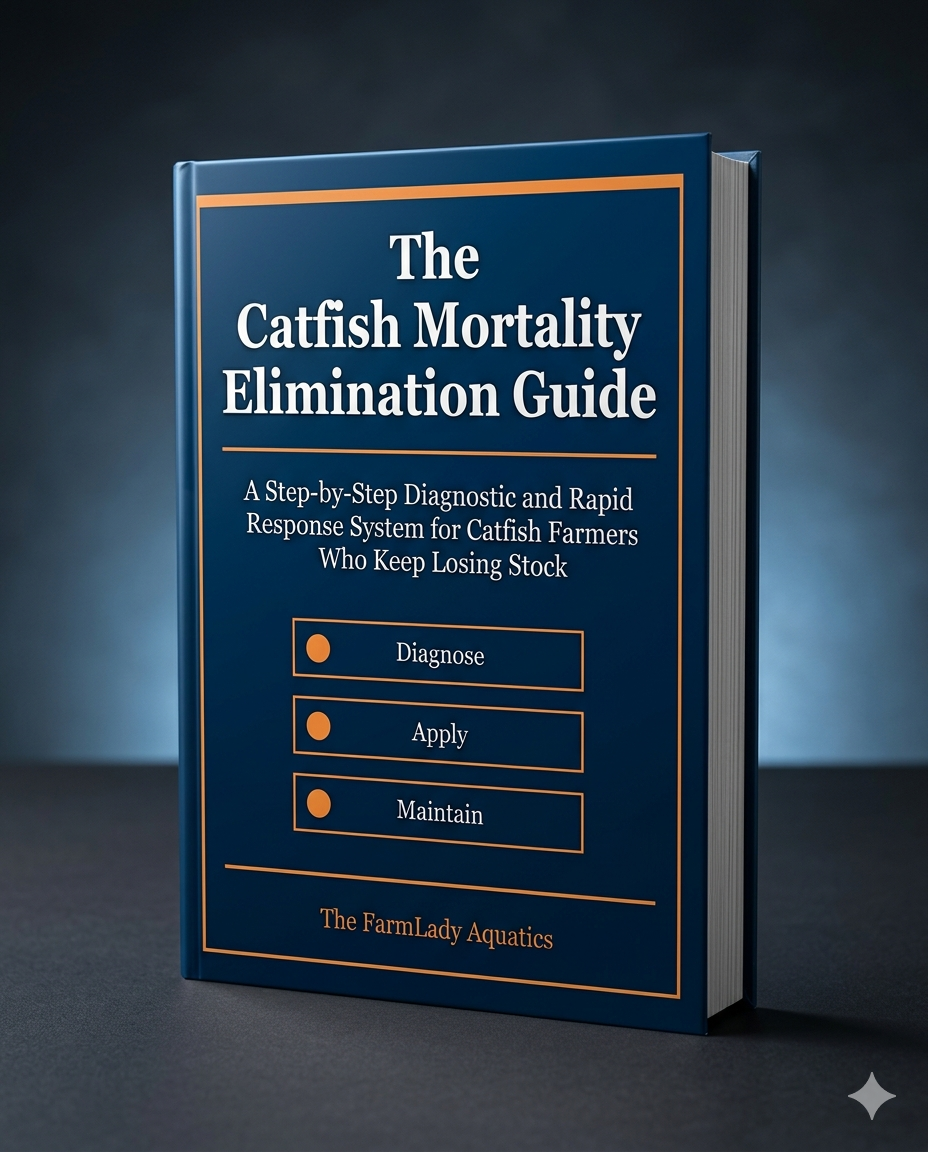
The Catfish Mortality Elimination Guide
A Step-by-Step Diagnostic and Rapid Response System for Catfish Farmers Who Keep Losing Stock — by Olabisi Oluwasikemi, The FarmLady | The FarmLady Aquatics
Here is exactly what is inside the guide:
- The 7 Silent Warning Signs That Appear 24–72 Hours Before Every Catfish Die-Off — Pg. 4 Exactly what each sign looks like, what it means biologically, and the precise numbered action to take the moment you see it — before a single fish dies.
- The "Right Now" Pond Audit — Pg. 9 A one-page 10-point checklist you complete standing at your pond in under 15 minutes. Produces an instant Green, Yellow, or Red health score for every pond — starting today.
- The Water Colour and Smell Diagnosis Chart — Pg. 14 What the colour and smell of your pond water is telling you right now — and the specific corrective action for each reading. No test kit required.
- The 6 Root Causes Behind 90% of Catfish Mass Die-Offs — Pg. 18 Oxygen depletion, ammonia toxicity, pathogen bloom, thermal shock, feed toxicity, and handling stress — how to identify each one and stop it before it costs you your cycle.
- Emergency Response Protocol Cards — One Per Warning Sign — Pg. 24 Step-by-step numbered interventions, correct treatment dosages by pond size, treatment duration, and expected recovery timeline — for every crisis scenario.
- The Aquaculture Treatment Reference Table — Pg. 33 Exactly what to buy, correct dosages, what to avoid, and how to match the treatment to the actual diagnosis. Stop spending money on products that do not match your problem.
- The Weekly Pond Health Scorecard and Cycle-End Mortality Audit — Pg. 38 A weekly management ritual that keeps your ponds in the Green Zone — plus a post-harvest audit template so each cycle improves on the last.
And the best part? You do not need a water testing laboratory. You do not need an aquaculture degree. You do not need to live at your pond all day. This is the same system that took Emeka from catastrophic losses to 91% survival — and has since worked for over 200 farmers across Africa and the diaspora who have applied it.
⭐ Real Fishprenuers. Real Results. From Around the World.
I don't lie to you. I use this guide to save one whole pond that was supposed to die. The water colour chart alone worth more than the price. I see my water changing colour on Wednesday, I check the guide, I do exactly what dem write — by Friday my fish dey fine. Before I get this guide I don lose 3 cycles. The FarmLady guide is the real deal.
I had never been taught to look at my pond water systematically. I thought water was just water — you change it when it looks bad. The FarmLady's water colour and smell chart completely changed how I manage my ponds. I caught an oxygen depletion problem building overnight before it killed anything. Farmers in Ghana need this guide urgently.
I manage my husband's farm while he travels for work and I was always afraid because I have no formal farming background. This guide gave me confidence I never had before. I do the pond audit checklist every morning. Last cycle I finished with 87% survival. My husband called me his Farm Manager for the first time. Madam FarmLady — thank you sincerely.
I have bought three catfish farming courses before this. None of them taught me what this single guide taught me. I was farming blind before — I see that clearly now. The emergency protocol cards are so practical I laminated them and they hang next to every pond. On Day 9 of my current cycle I spotted warning sign number 4 and acted. Not one fish lost. This guide paid for itself twenty times over.
I run a catfish farm remotely from the UK. I bought this guide and shared it with my farm hand. The week he started the morning checklist he caught a problem on Day 6. We diagnosed it together over a video call — me in Milton Keynes, him at the pond. Problem resolved. Stock saved. £9.97 to protect a significant investment. The FarmLady knows her craft completely.
Just So You Know — Researching, Testing, and Producing This Guide Properly Cost The FarmLady Aquatics Over ₦185,000 ($120 USD)
- Professional copywriter to structure and write the full guide content — ₦45,000
- Technical aquaculture editor to verify every protocol and dosage — ₦35,000
- Multiple farm consultation visits to test and validate the system in the field — ₦40,000
- Graphic designer for visual diagnosis charts, checklists, and layout — ₦30,000
- PDF formatting, professional design, and print-ready output — ₦20,000
- Digital delivery system, website, and payment platform setup — ₦15,000
Every naira of that investment went into making this guide accurate, practical, and usable by any farmer anywhere in the world — regardless of education level or farming experience. I could charge you ₦185,000 for it. If it saves you from even one die-off it would still be worth every kobo.
I am not going to charge you ₦185,000...
Not ₦50,000...
Not even ₦25,000...
A fair price for everything inside this guide is ₦15,000 / $10 USD. For most farmers, that is less than one week of feed cost — and this guide will protect months of it.
But right now, for a limited time, you will not even pay that.
₦15,000 / $10 ₦9,800 One-time payment · Instant digital download · Works on phone, tablet, and computerInternational buyers pay $9.97 USD via Nestuge · All currencies accepted ⚠️ This Discounted Price Is ONLY For the First 50 Buyers — After That, the Price Returns to ₦15,000 / $10. Do Not Come Back and Meet a Higher Price.
🎁 WAIT — The FarmLady Has Two FREE Gifts For You...
If you are among the first 50 buyers, you will receive these two powerful bonus guides alongside your main guide. (Today Only)
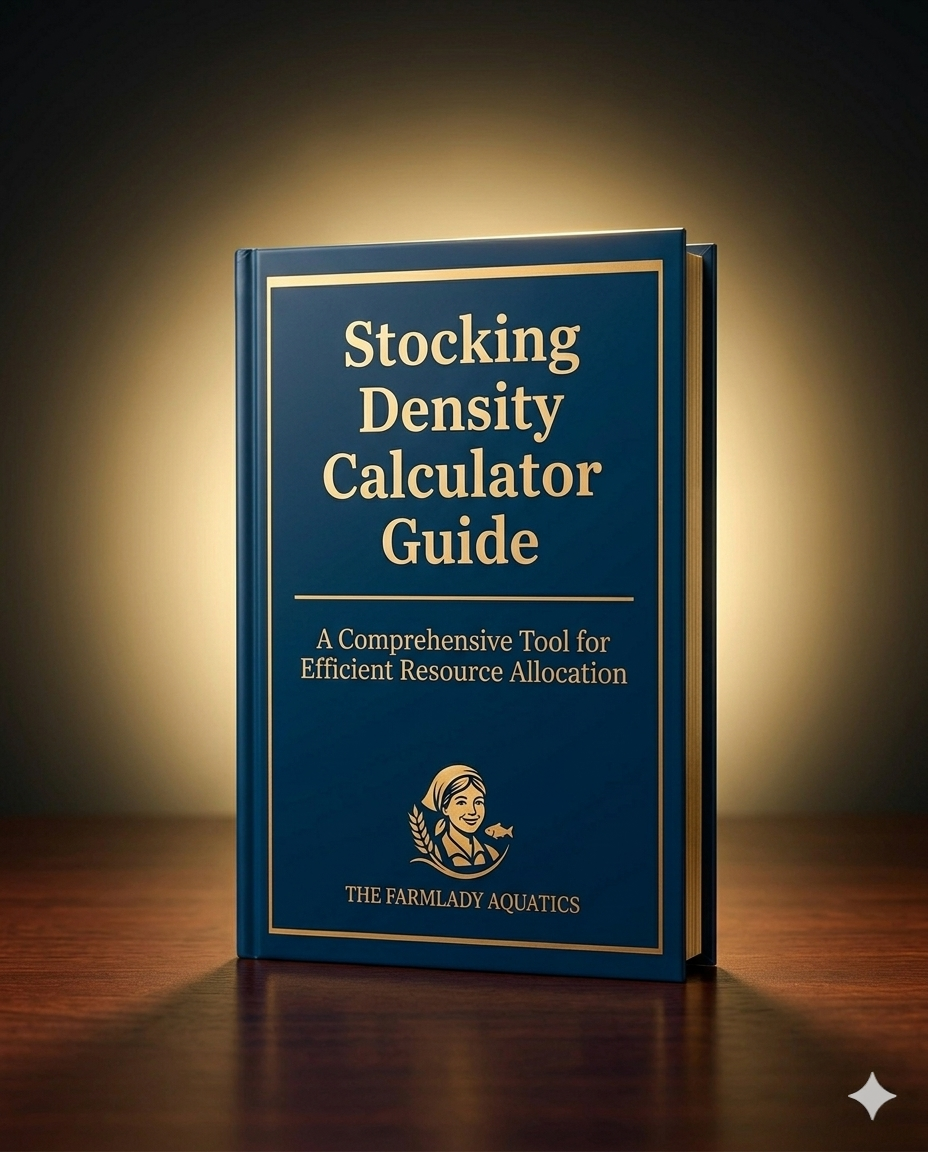
How to Calculate the Right Stocking Density for Your Pond
A simple, straightforward guide that shows you exactly how many fish your pond can carry — based on your pond size, water volume, and management capacity. Includes a ready-made reference table for common pond sizes. No more overcrowding. No more understocking. Works for any pond type, any region, any scale.
Value: ₦5,000 / $4 — Yours FREE today
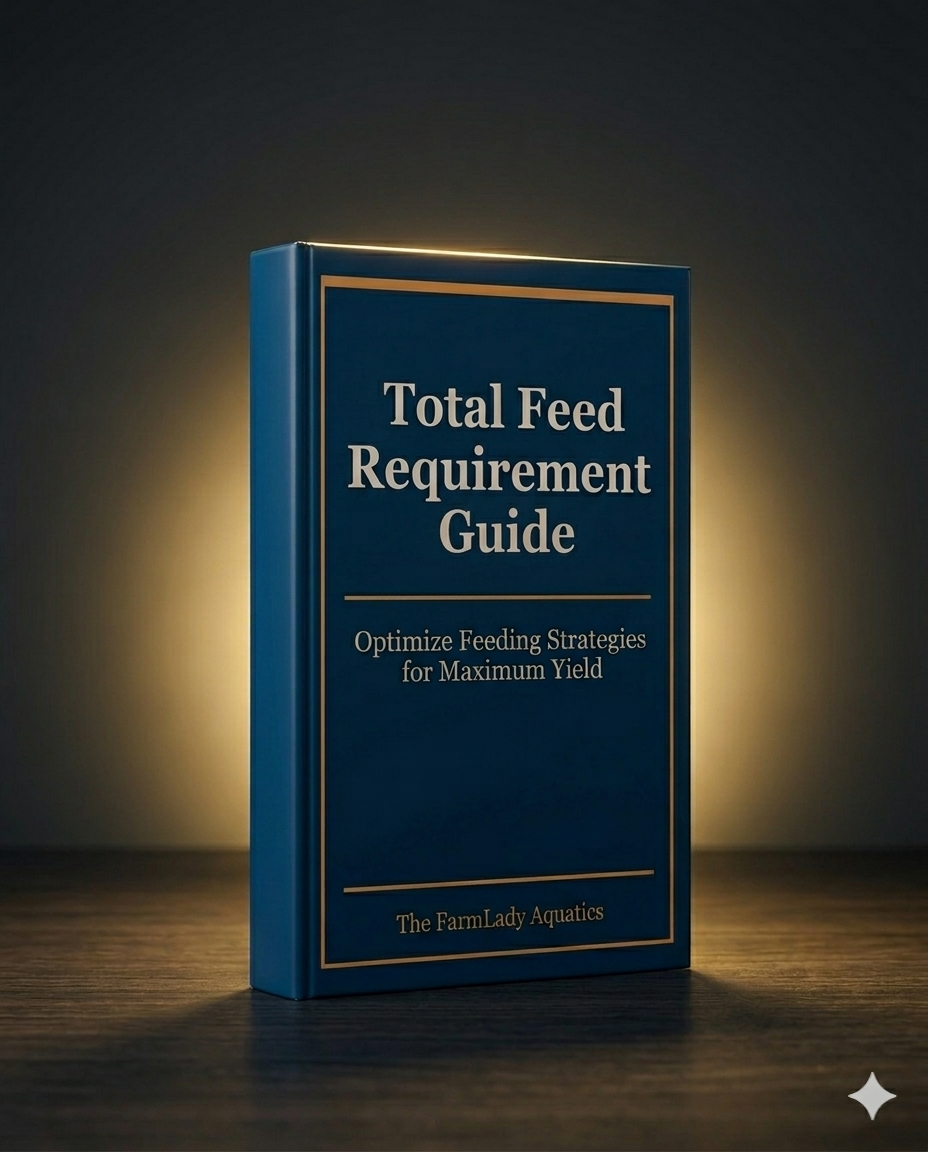
Exactly How Much Feed Your Catfish Need to Reach Table Size
Know your total feed requirement before you stock a single fish. Includes fully worked examples for 100 fish and 1,000 fish — so you can plan your feed budget accurately, stop running short mid-cycle, and stop wasting money on excess stock. Applicable for catfish farmers worldwide at any scale.
Value: ₦3,500 / $3 — Yours FREE today
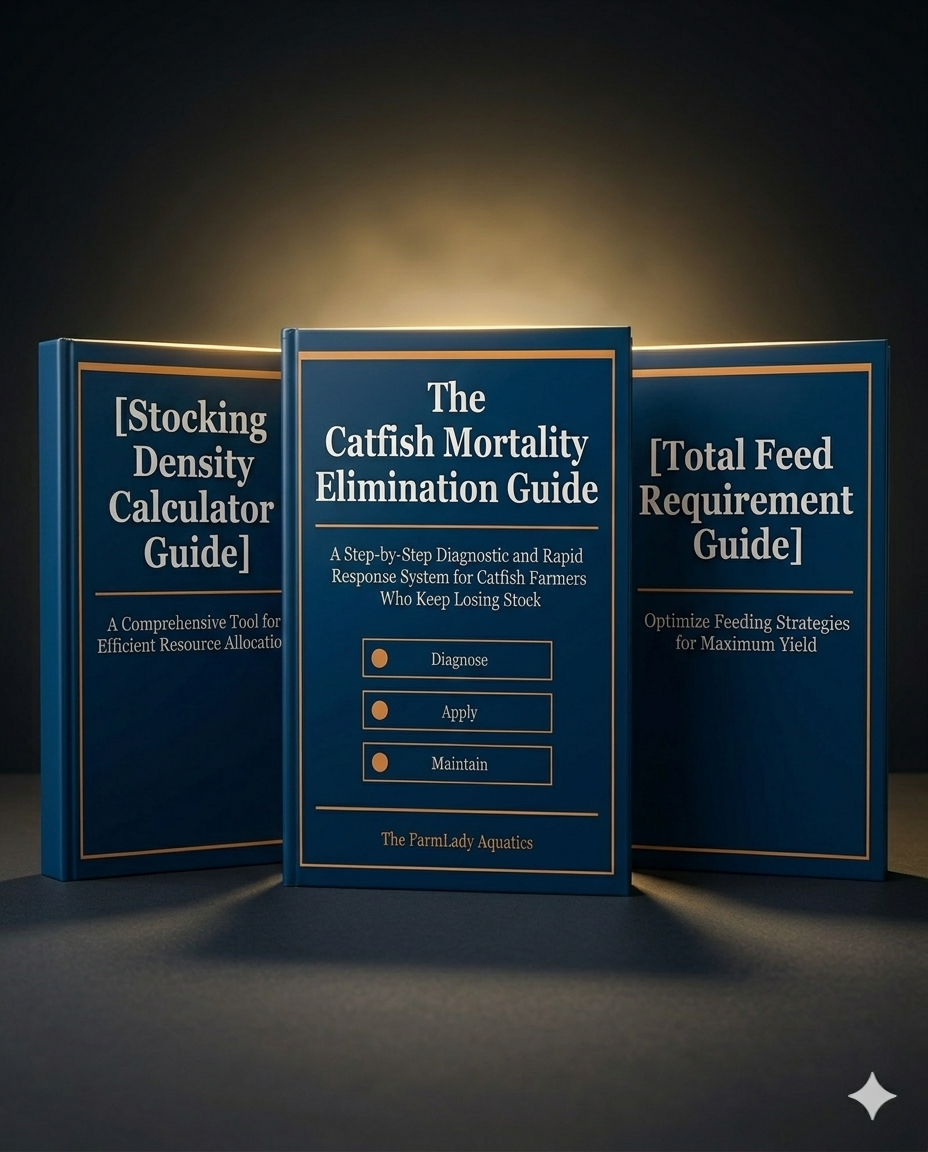
Total Bundle Value: ₦23,500 / $17 | You Pay Only ₦9,800 / $9.97 Today
👀 See What Is Happening Right Now...
⚠️ 37 Fishprenuers worldwide have already claimed their copy at this price...
Only 13 slots remain at ₦9,800 / $9.97.
You are not the only person reading this page right now.
When the 50th buyer pays, this price closes.
The FarmLady's Bold 30-Day Promise
I understand that trust is earned. Especially in a market where too many products have overpromised and underdelivered.
So here is my promise to you: Apply The Catfish Mortality Elimination Guide for 30 days. Do the morning pond observation. Use the water diagnosis chart. Follow the emergency protocols when you need them.
If after 30 days you do not feel significantly more equipped, more confident, and more in control of your pond health — send me a message and I will refund every naira or dollar. No argument. No drama. No questions.
The risk is entirely mine. The only real risk for you is continuing your next cycle without this system.
Yes — I Want The Guide + 30-Day Money-Back Guarantee Zero Risk · Instant Access · Secure Checkout via Nestuge⭐ More Farmers. More Countries. More Proof.
The Right Now Pond Audit on page 9 — I did it the same day I bought the guide. My pond scored Yellow. I never knew a problem was developing. I did the intervention. One week later the pond scored Green. Not one fish lost. This guide knows more than all the courses I have taken combined. The FarmLady does not play with catfish knowledge.
I have been farming catfish in Ghana for four years. I thought my losses were just part of the business until I read this guide. The 6 root causes section alone opened my eyes completely. I identified what has been killing my fish in cycle after cycle — it was ammonia build-up I had been misreading as a disease. Changed everything. Best money I have spent on my farm education.
I invested my retirement savings into this farm. I could not sleep at night. The first morning I did the pond audit from this guide I found a problem I had been walking past for two weeks. I am telling every farmer I know — get this guide before you stock your next cycle, not after you lose your fish. It should be compulsory reading for every catfish farmer.
Managing a catfish farm from the US is not easy. I depend on my farm manager back home for daily updates but I never had a system for him to follow. I bought this guide, shared it, and now he uses the exact observation checklist every morning and sends me his pond scores. We caught a problem together last month over a video call. The FarmLady built something genuinely international with this guide.
I manage my mother's catfish farm in Enugu remotely from Toronto. Communication with our farm hand was always a challenge. I bought the guide, shared it with him, and now when he calls me we use the same language from the guide. We diagnosed and resolved a problem together over a video call last month. Remarkable system. Remarkable woman behind it.
You Have Two Choices Right Now.
Get The Catfish Mortality Elimination Guide. Start your 10-minute morning pond observation ritual tomorrow. Learn to read the 7 warning signs before they cost you another cycle. Apply the emergency protocols when you need them. Finish your next cycle with 85–90% survival. Stand at your pond on harvest day and watch full-sized, healthy fish loaded into the buyer's vehicle. Show your family what this farm can actually do. Become the farmer other people call when things go wrong.
Go back to posting in farming groups at midnight asking why your fish are dying. Keep applying salt to problems that salt cannot fix. Keep buying treatments without a diagnosis. Keep explaining to your family why this cycle was difficult again. Keep walking to your pond every morning with that anxiety in your chest. Keep telling yourself next cycle will be different — without changing anything that made this cycle hard.
⏰ 13 slots remain at ₦9,800 / $9.97. The clock is ticking.
Maybe you found this page for a reason today.
The FarmLady built this guide for exactly the farmer you are right now — wherever you are in the world.
🔒 100% Secure Checkout · Powered by Nestuge.com
Nigerian buyers: ₦9,800 · International buyers: $9.97 USD
Card, Bank Transfer, and Mobile Money accepted worldwide
📝 Share Your Experience With This Guide